
Christmas, Memories

Ornament Memories

Never worry about the size of your Christmas tree. In the eyes of children, they are all 30 feet tall.

Larry Wilde, Comedian

One effect of aging I didn’t expect was becoming more selective about Christmas decorations.

Decades ago, when our tree was placed under a cathedral ceiling and could be decorated by reaching over the banister, I was easily seduced by the Christmas aisle. Off season, I scoured the Christmas sections of tourist shops and clearance aisles. Ornaments abounded.

Such purchases slowed when our tree height was reduced by a couple of feet. Today they are rare.
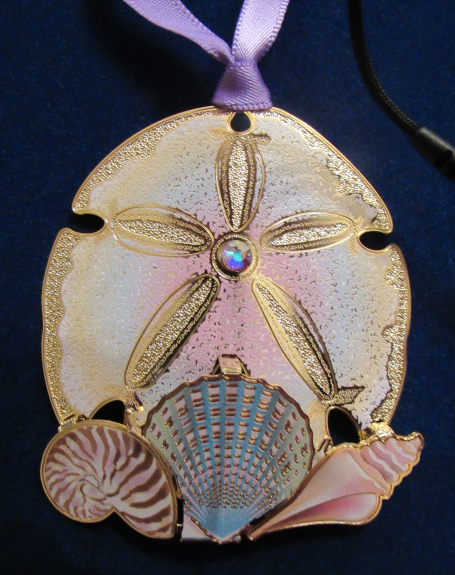
My beach ornament

Now, a tree half the size of former trees stands beside our front window. I never thought I would surrender, but my husband and I can’t handle transporting or decorating or undecorating a large tree.

Beginnings and endings are most memorable. (See here.) With tree decorating, that means placing ornaments and removing them. During that time, I always reflect on the friends and events my ornaments represent.

Memories bestow value. (See here.) And it’s those memories of friends and events which now make the time-consuming placement and removal and storage of my ornaments worthwhile.

Collecting or remembering?


Books, Memories, Parenting

Reading to Readers

When my boys were beginning readers, a mom with children in college expressed a regret.

I wish I had continued reading aloud to my children, even when they were in high school.

Marilyn Rockett, Author of Homeschooling at the Speed of Life

I loved reading to my boys, so it was easy to take Marilyn’s regret to heart that day. During the middle school and high school years, we read together although audio books sometimes were a read-aloud substitute.

I read aloud for the love of sharing my favorite books with my favorite people. I didn’t fully realize we were receiving a heritage of common memories.

This past year, my youngest son called with details of a scene and asked if I remembered the book from fifteen years ago. Of course, I did. How could I forget the memoir Belles on Their Toes by Gilbreth and Carey? I was not surprised that I remembered the last book I read aloud to the entire family, but I was surprised that he did.

It turns out my sons remember even more about our books—not only their plots but where we were at the time they listened.

Any favorite read-aloud memories?

Art, Book Recommendations, Memories

World Letter Writing Day #2

Because today is World Letter Writing Day, it seems appropriate to share my favorite published letters. (See here)

From October 1951 to May 1952, Juan and Rie Munoz taught native children on an Alaskan Island in the Bering Sea. Their main contact with the outside world was by radio. They received one airdrop and one visit by an icebreaker. Even knowing that their letters could not be mailed until their service ended, they wrote over forty to their families.

These letters and accompanying photographs were discovered in 2005 and compiled by their son. Like the letters of my family, The King Island Journal contains the mundane: bathing, tanning hides, making clothes, gathering food, cooking, and, especially, their dogs’ and students’ antics. Also like my family, their mundane is both revealing and entertaining.

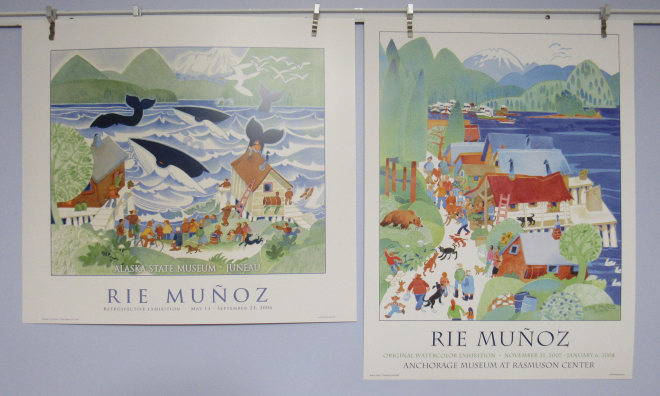
My current kitchen posters

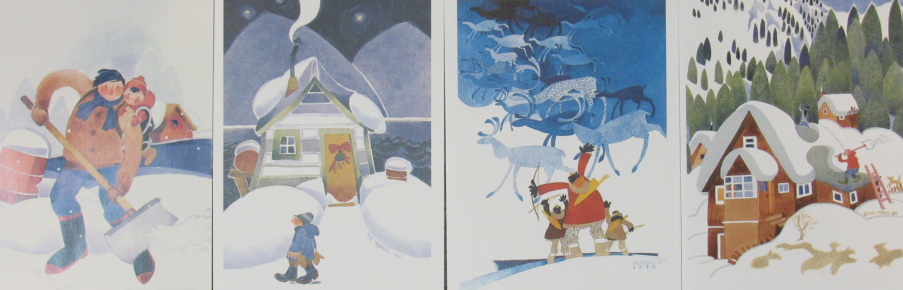
Rie Munoz settled in Juneau and is best known for her artwork depicting native life in Alaska. I love both Alaska and art, and my search for an Alaskan artist led to what I consider an even greater treasure—letters.

Rie Munoz’s watercolors, (See here for more)

My husband enjoyed reading John and Abigail Adams’ correspondence. Any favorite published letters?

Memories

Sharing Memories Brings Clarity

Sharing memories can bring conflict and confusion. (See Unreliable Memories Here) Sharing can also bring clarity and healing.

In eighth grade—upon returning from school—I was told that my brother had run away. My father was searching.  I was worried and confused. Why was my brother so unhappy? I wondered for decades until I asked.

“I never ran away,” my brother said. “Jeff and I skipped school. We got caught because of the snow. We didn’t expect an early dismissal.”

I didn’t remember snow.

“No,” I said. “The principal called to ask if you were supposed to be at school. Daddy had been searching since morning.”

A substitute teacher had called roll and thus attention to my brother’s absence. A classmate had seen my brother and his friend on school grounds. The diligent substitute told the principal, who called my mother.

My brother never knew there was a substitute teacher and hours of combing the woods behind the school.

We exchanged numerous details. Our combined memories gave a complete story. My heart rejoiced. My brother had been hanging out with a friend—not trudging down a road and severing family ties.

Any painful memories? Would asking questions help?

Memories

Unreliable Memories

Be careful before you believe what you remember.

Jane K. Cleland

When my younger brother was a child, he sprayed the kitchen of our home with the garden hose. That is a true fact.

My memories: My brother was two or three. He opened the back door and sprayed. I was soaked. I screamed for my mother to stop him. She wouldn’t. My older sister ran through the water and wrestled the hose nozzle from my brother. He hosed the kitchen a second time that summer.

My brother’s memories:  He was four or five. My sister and I had locked him out of the house. He deserved it. He plotted revenge and decided on the hose. When the back door opened, he took action. My sister and I ran down the hall screaming. There was one incident.

My sister’s memories: None.

During a long drive to visit grandparents, there was an incident involving a doughnut box. My siblings and I agree on that fact. We agree on the box’s yucky contents—and in hindsight we laugh. However, we have varying—sometimes conflicting—memories about other details.

Along the way, I learned that memories are unreliable.

How do you reconcile conflicting memories?