
Friendship, Parenting

Their Longings Not Yours (Reprise)

Do not do unto others as you would that they do unto you. Their tastes may not be the same.

George Bernard Shaew

The quote above does not negate the Golden Rule found in Jesus’s Sermon on the Mount. It gives guidance. Love, acceptance, and respect look different to different people.

A friend showed me a wedding present that was different from her tastes and would never be used. We were amused by it. However, my friend’s perspective changed when the giver shared that the item was the one wedding gift she had longed for thirty years earlier but had not received.

Four summers later, I was pregnant with my first child. An acquaintance delivered her first child a month before me. During church announcements, we were urged to visit her that afternoon. My husband thought we should. I disagreed. Hours after delivery, I wouldn’t want a room full of close friends, certainly not acquaintances.

I was wrong. Lindy was disappointed we had not joined the crowd.

How do you discern?

Maybe raising children was just giving them the things you loved most in the world and hoping that they loved them too.

Kevin Wilson, Nothing to Look At
Parenting

Their Longings, Not Yours

My father longed to drive the family car, a privilege he was denied even after serving in the Navy.  Even more, he longed to finish college. He proudly provided college and a car for me.

I didn’t care about a car and took college for granted.  I provided my childhood longings: being read to, family vacations, and sacred—not secular— Christmas celebrations.  My husband provided his longing, private music lessons. (We also provided college and cars.)

Like me, my children’s desires differed from their parents. Along the way, I understood I had treated my children like I wanted to be treated, not like they wanted to be treated.

A senior manager at a major corporation confessed a similar mistake. The firm told managers “Treat employees the way you would like to be treated.” When the firm expanded internationally, it realized the fallacy. Employees wanted to be treated differently than their managers would have wanted to be treated.

I explained my childhood desires to my children and how they affected my parenting decisions. I wish I had known how much their lists differed from mine.

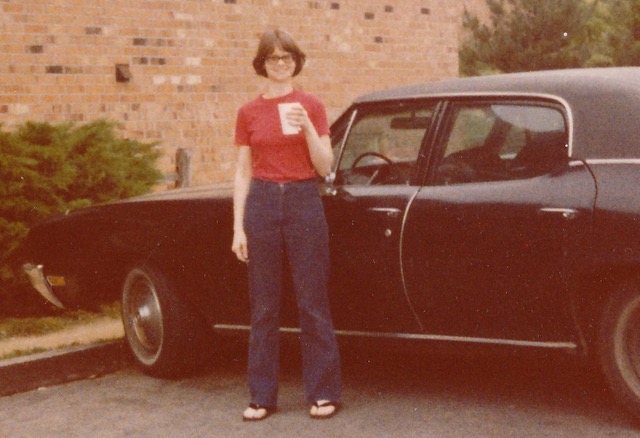
The Skylark given by my father. (1980)

Have you shared your childhood desires with your family?

Memories, Parenting

Their Memories, Not Yours

I thought having my hair cut by my favorite stylist was the reason for the salon visit. However, it was her words that were more important that day.

I want my memories, not my aunt’s.

Shirley was explaining why she was discarding figurines, furniture, and even fine china that had been dear to her mother’s unmarried sister. “My limited space is reserved for my memories,” she said.

The same is true for our children. They don’t want our memories.

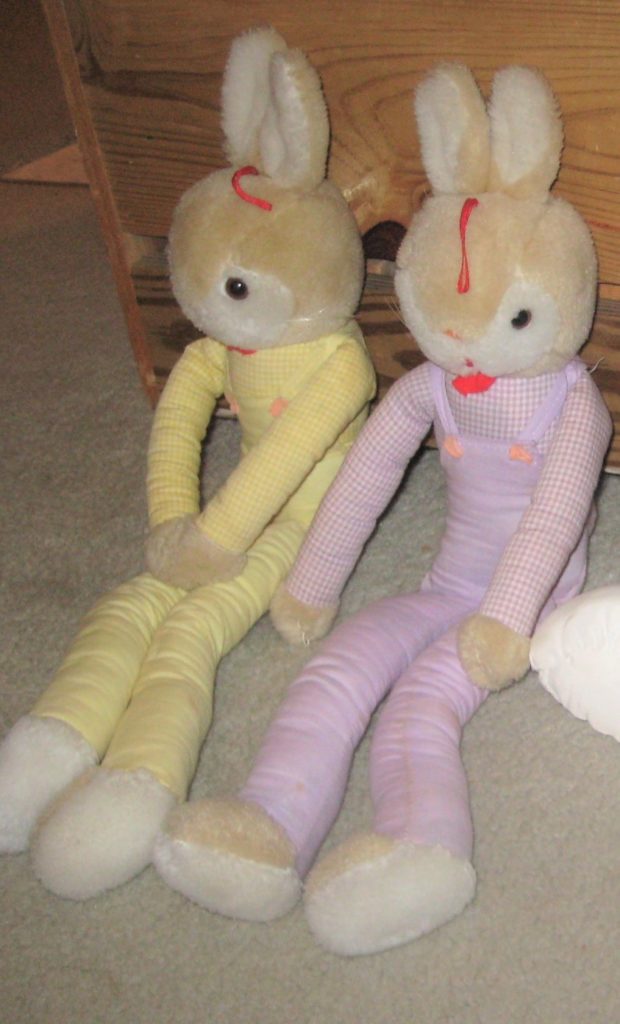
“We have to keep Hoppers,” one adult son insisted when I was decluttering. Hoppers was a 1980s skinny, stuffed, lavender bunny whose long legs had been re-sewn twice. “Get rid of that instead,” he suggested and pointed to a large Gund Classic Winnie-the-Pooh that my cousin recently had given me.

Give up a new, specialty, stuffed animal for a stitched-up, generic one? Yes, because the former held no memories for my son.

Pristine Pooh had not been tossed off the top bunk in diving competitions with Roughy Tough and Blue Bear. Pooh had not held an elected office in my children’s stuffed animal society. Zero memories. Zero worth.

Hoppers and Hoppers. Both had the same name.

Which possessions hold special memories?

Parenting

Age Appropriateness (Reprise)

As an adult during World War II, Corrie ten Boom, her father, Casper, and her oldest sister, Betsie, smuggled Jews to safety. The family saved 800 lives. After the family was betrayed, Casper died a few days later in captivity, and Betsie and Corrie were taken to Ravensbruck concentration camp. Betise died there. Corrie was released and traveled the world. Her message?

There is no pit so deep that God’s love is not deeper still.

As a child, Corrie sometimes rode the train with her father. During one ride, she took the opportunity to ask Casper to define a word she had heard.

Casper didn’t say anything right away, and then, he asked Corrie to carry his suitcase when they exited the train. When the time came, she could not lift the heavy suitcase no matter how much she tried. Finally, Corrie admitted defeat.

Casper responded that only a poor father would ask a child to carry a suitcase too heavy. He said that some knowledge was the same, too heavy for children. He would carry the word for her until she was older.

What are your children trying to carry before they are ready?

(See Age Appropriateness Here)

Homeschooling, Parenting

Age Appropriateness

Before I had children and thoughts about their education, an acquaintance expressed concern about her daughter’s sixth-grade accelerated reading list. The teacher would not listen to the mother’s concerns. After hearing the list, a second-year law student scoffed. He had read most of the books in high school. He defended his favorite.

The one of wisest women I have ever known responded, “The issue is appropriateness, not whether the story is good. High school appropriateness is not sixth-grade appropriateness.” 

I remembered Shirley’s words years later when my boys wanted to read the books and watch the movies of their peers. We saved some for when they were more appropriate, and perhaps, could be discussed.

I learned that appropriateness varies among children of the same age. Just as we don’t buy six-year-old jeans, we shouldn’t buy the myth of six-year-old animated movies. Same with twelve-year-old shoes and twelve-year-old literature.*

Some items should stay unseen.  A friend’s seven-year-old son asked, “If this movie is not appropriate for me, is it appropriate for you, Mom?” “No,” my friend told him. “It’s not appropriate for me, either.”

* Thank you, Cathy Duffy, for a similar analogy.

What helps you determine appropriateness?