
Decisions, Money

Love It Or Send It Back

No matter the school choice, summer is a big buying season for the coming academic year. Based on reviews, I occasionally bought curriculum unseen. When it arrived, I sometimes had doubts after looking at the teacher’s guide or skimming the text.

However, I would talk myself into liking it because I thought I should. Others claimed it was their favorite. Or I had spent much time deciding. Or I had spent a lot of money. Or it was a bargain. Or several of the above.

Along the way, I learned to trust my misgivings. No matter how much I hoped that a doubtful curriculum would work, it never did.

If I didn’t like a choice from the beginning, I never would.

I should send it back and pay the postage. (See Free Shipping, No Thanks Here)

The same principle applied to store purchases, especially clothing. If I didn’t love it in the dressing room, I should leave it. Research shows an item is worth the most at the moment of purchase.  Afterwards, the value diminishes. I learned liking wasn’t enough to pull out my wallet.

What do you need to return?

Decisions, Homeschooling

Homeschool Peer Pressure

During decades of homeschooling and observing homeschoolers, I observed a cycle. We start by caring what non-homeschoolers think. Next, we bond with homeschoolers and arrive at a place where we don’t care what outsiders think. However, we care too much what other homeschoolers think—at times to the detriment of our family.

Homeschool peer pressure may keep us—or at least delay us—from taking a needed break from homeschooling, or abandoning a popular curriculum, or pulling out of group classes that do not meet our needs.

While being pressured to take advice from others, I came across a principle I still remember.

Decision-making belongs to the person who carries the responsibility for the consequences of the decision.

I needed that reminder.

During driver training, other drivers honked for our sons to turn right on red and into oncoming traffic. Honking encouraged other reckless driving. We told our sons, “It is your injury, and your regrets, and your court date, and our car, and our insurance premium if you have an accident. Not the person honking.”

Our family bore the serious consequences for our driving behavior, not hurried drivers. Therefore, our family made those decisions.

Anyone honking at you?

Decisions, Friendship

Trust Your Instinct

A long-distance friend had a January birthday, and I wanted a gift that reflected her personality and tastes. I was stumped.

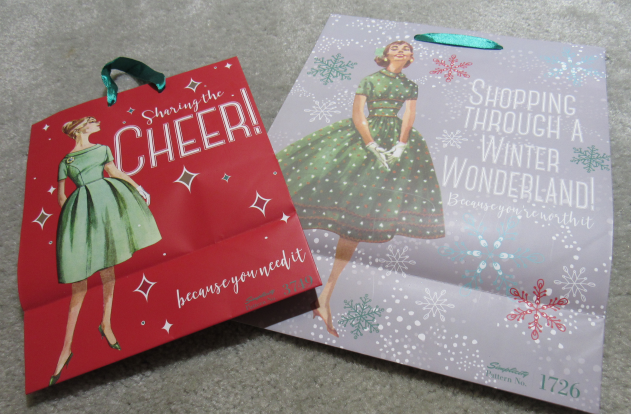
One December afternoon, I perused Christmas gift bags at JOANN Fabrics. One rack featured women in 1960’s outfits.  The writing on one snowy scene declared, “Shopping in a Winter Wonderland.” Faye loved retro, snow, and shopping. I bought the bag. Now I needed the gift.

On the way to the car, I thought how Faye would love the bag even without a gift inside.

Go back and buy more of those gift bags for her birthday,” I thought. “She would love them all.”

A sample of the selection

I used the long checkout line as an excuse to dismiss my irrational thoughts. My friend would never judge a gift from me, but empty gift bags?

A week later, I was back at JOANN Fabrics and took the plunge. I mailed Faye an assortment of empty gift bags. Inside her birthday card, I warned that the birthday present was strange. Intrigued, Faye opened it early. She, her family, and her even friends loved my idea.

Want a perfect gift? Follow your instincts. Risk being wrong.

When has a friendship risk paid off?

Book Recommendations, Decisions

Mini Habits: Guest Blog

Beth Sterne* shares what she has learned about breaking bad habits.

Mini habits make success and permanent change attainable. Stephen Guise explains a small-step approach in Mini Habits: Smaller Habits, Bigger Results.

The goal is to change your brain with repetition.

Force yourself to take 1-4 strategic actions daily.  (Ten minutes max, all together) These actions are too small to fail or to skip. Mini goals should be “stupid small.” You succeed when you do that small thing.

You may do more, but no more is required. Do not raise the goal.

Guise’s brain resisted a 30-minute workout. One push-up? His brain agreed. He now does full workouts. He requires himself to write 50 words per day; he usually writes two thousand. Success is one push up and fifty words. Doing a little bit daily has more impact than doing a lot on one day.

A big push day ends. A little bit daily grows into a lifelong habit.

The subconscious does not fight small steps. Taking one step at a time, you cooperate with the subconscious – while transforming it. You’ve sneaked into the control room.

What mini habit will you start?

* Beth blogs at https://putoffprocrastination.com

Christmas, Decisions

Planning Questions

One Christmas, I used some excellent planning advice. I asked each family member which minor Christmas tradition was most important. If I had to streamline, why remove a favorite?

After twenty-five years, I vividly remember one request—keep the candy dish. The Christmas before, I had filled a crystal wedding present with assorted wrapped candy.  Nice candy. Each child was allowed to pick one piece a day during Advent. I had forgotten the candy dish and did not think its one appearance constituted a tradition. However, a small heart did.

To reduce Thanksgiving cooking, a friend asked her family which dishes meant the most. She received her answers, and advice. “Mom, we like the store-bought dressing better than your homemade. Serve that.”

For over a decade, I served a cranberry coffee cake Christmas morning. It was eaten without much comment. Two years ago, a son living in another state mentioned how much he loved it and couldn’t wait to taste it again. That reminded me to ask as well before making any menu changes.

Along the way I learned not to assume which food or traditions were important to my family.

Which questions might reduce your holiday busyness?