
Homeschooling

Independent Learners

Multiple speakers and magazine articles had declared children were natural learners. (Natural Learners? Or Not? here.) Even better, teens were independent learners and required little parental input.

Early one morning, I sold a used geometry book online. The buyer asked if I had my lesson plans, and I offered my experience as well.

“My sons could not be given geometry and left alone to master it,” I typed. “They are not always independent learners.”

The admission was important to both me and my buyer. She confessed that her teens were not independent learners for most subjects.

Swapping stories felt like a conspiratorial moment against peers.

I added, “I would be upset if a traditional teacher handed my sons books to master and told them to return when ready to be tested. Why should we be expected to do that?”  

I am grateful to the home-educating pioneers for their courage, legacy, and advice. I am grateful they invested in my generation. However, those with both time and willingness to write articles and speak at conferences were the parents most likely to have strong independent learners. I wish I had realized this sooner.

Which declarations do not match your reality?

Decisions, Friendship

Trust Your Instinct

A long-distance friend had a January birthday, and I wanted a gift that reflected her personality and tastes. I was stumped.

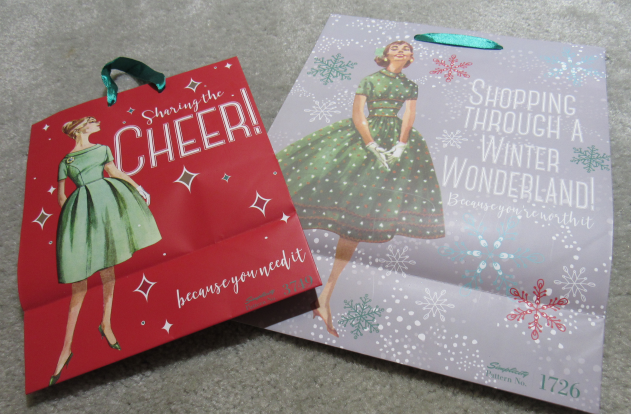
One December afternoon, I perused Christmas gift bags at JOANN Fabrics. One rack featured women in 1960’s outfits.  The writing on one snowy scene declared, “Shopping in a Winter Wonderland.” Faye loved retro, snow, and shopping. I bought the bag. Now I needed the gift.

On the way to the car, I thought how Faye would love the bag even without a gift inside.

Go back and buy more of those gift bags for her birthday,” I thought. “She would love them all.”

A sample of the selection

I used the long checkout line as an excuse to dismiss my irrational thoughts. My friend would never judge a gift from me, but empty gift bags?

A week later, I was back at JOANN Fabrics and took the plunge. I mailed Faye an assortment of empty gift bags. Inside her birthday card, I warned that the birthday present was strange. Intrigued, Faye opened it early. She, her family, and her even friends loved my idea.

Want a perfect gift? Follow your instincts. Risk being wrong.

When has a friendship risk paid off?

Book Recommendations, Decisions

Mini Habits: Guest Blog

Beth Sterne* shares what she has learned about breaking bad habits.

Mini habits make success and permanent change attainable. Stephen Guise explains a small-step approach in Mini Habits: Smaller Habits, Bigger Results.

The goal is to change your brain with repetition.

Force yourself to take 1-4 strategic actions daily.  (Ten minutes max, all together) These actions are too small to fail or to skip. Mini goals should be “stupid small.” You succeed when you do that small thing.

You may do more, but no more is required. Do not raise the goal.

Guise’s brain resisted a 30-minute workout. One push-up? His brain agreed. He now does full workouts. He requires himself to write 50 words per day; he usually writes two thousand. Success is one push up and fifty words. Doing a little bit daily has more impact than doing a lot on one day.

A big push day ends. A little bit daily grows into a lifelong habit.

The subconscious does not fight small steps. Taking one step at a time, you cooperate with the subconscious – while transforming it. You’ve sneaked into the control room.

What mini habit will you start?

* Beth blogs at https://putoffprocrastination.com

Book Recommendations, Parenting

Habits Rule

I wish I had known The Power of Habitnot just the title of a book by Charles Duhigg but also a reality. Once formed, habits cannot be dropped. They stay in our basal ganglia—the center of our brain.

Habit retention is good news. Good habits are not easily lost: prayer, Bible study, brushing our teeth, exercising, the best way to drive a route.

Habit retention is bad news.  Bad habits cannot be easily dropped: procrastination, gossip, tardiness, overeating.

How do we change habits if they are always in our brain? We replace them.

If I had understood the power of habit, I would have found and implemented good habits to replace the bad ones. I also would not have been as frustrated by habits that seemed impossible to break. I would have understood that bad habits were prepared to reappear.

Even more, I would have been more diligent about my children’s habit formation. “We can let this slide once because we are late,” I thought too many times. No, it is the start of a habit that will always be retained in my sons’ basal ganglia.

For more information see https://charlesduhigg.com/the-power-of-habit/

Any habits need replacing?

Holidays, Memories

Year End Review

Along the way, I learned the importance of organizing and reviewing family photographs on a regular basis. Photographic records of family history are precious for too many reasons to list here.

Three years ago, we spent New Year’s Day putting the finishing touches on our boys’ photo albums. They now have a visual record from birth through the beginning of college.

As we looked at photographs of events we had forgotten, I wished we had reviewed them on a regular basis. We could have savored the memories. Perhaps we would have implanted them more deeply by discussing the photographs.

I don’t remember going there are sad words to hear when a family vacation trip was important to you.

Organizing photographs on New Year’s Day would have kept the album work manageable. It would have also given us a family activity on a day that was usually quiet and unscheduled.

News Year’s Day is a time to look forward. It also can be the best time to look back in a practical way, one which will yield fruit for many years.

I implore you to spend time looking at and discussing your photographs with your spouse and children.