
Parenting

Make a Grievance Jar

Like a Worry Jar (See Here), a Grievance Jar is simply a jar containing grievances that have been written on a piece of paper. Some families have a set time for dealing with the jar’s contents—the end of each day or a set day of the week.

I used to think that listening to children’s complaints undermined parental authority. It was also unbiblical.  

Do all things without grumbling or disputing, that you may be blameless and innocent children of God without blemish in the midst of a crooked and twisted generation, among who you shine as lights in the world.

Philippians 2:14-15 (ESV)

However, there is a significant difference between grumbling in anger and frustration and thoughtfully expressing a real or imagined wrong.

Along the way, I learned that understanding what my children considered to be unjust was a key to praying for them and helping their hearts. How could I solve a problem if it remained hidden?

Parents easily lose their children’s hearts in the older years. I wish I had developed a systematic way to address my sons’ grievances.

What about your own complaints?


Basics, Family, Parenting

War, Not Battles Pt.2

Be pitiful, for every man is fighting a hard battle.

Ian MacLaren, Zion’s Herald, January 26, 1898

Along the way, I learned that most people are fighting wars, not battles. What is the difference?

War involves a series of battles. War takes longer. War requires more resources. War has more setbacks. War causes more damage.

No matter the victor, war requires more repairs. War needs a longer recovery. War demands more time to process the experience.

I wish I had known I was fighting wars rather than battles. I would have been better prepared for both the fight and the aftermath.

Are you fighting or recovering?

Basics, Family, Friendship

War, Not Battles

Be kind. Everyone is fighting a battle.

I encounter these seven words regularly. They have been attributed to Socrates, Plato, and Plutarch. Once I heard them attributed to current celebrity Maria Shriver. Some reciters imply the words are their own.

Research reveals the originator as Rev. John Watson, a Scottish minister and author, who used the pseudonym Ian MacLaren.

Be pitiful, for every man is fighting a hard battle

Ian MacLaren, Zion’s Herald, January 26, 1898

This man beside us also has a hard fight with an unfavouring world… we are moved to deal kindly with him…

Rev. John Watson, The Homely Virtues 1903

The sentiment is compelling. No wonder various forms of it have been repeated for over a century.

Along the way—as family and friends and even casual acquaintances shared their stories—I learned that most people are not fighting battles. They are fighting wars.

Have you recognized the fight for what it is?

Book Recommendations, Winter

Winter Book Flood

Icelanders read the night away on Christmas Eve. (See Here for Christmas Book Flood) Our family never read the night away, but one winter, we did read the day away. My youngest still remembers the book I read aloud in its entirety—Trapped by the Winter Storm. Coincidentally, that son now lives near the setting of this favorite.

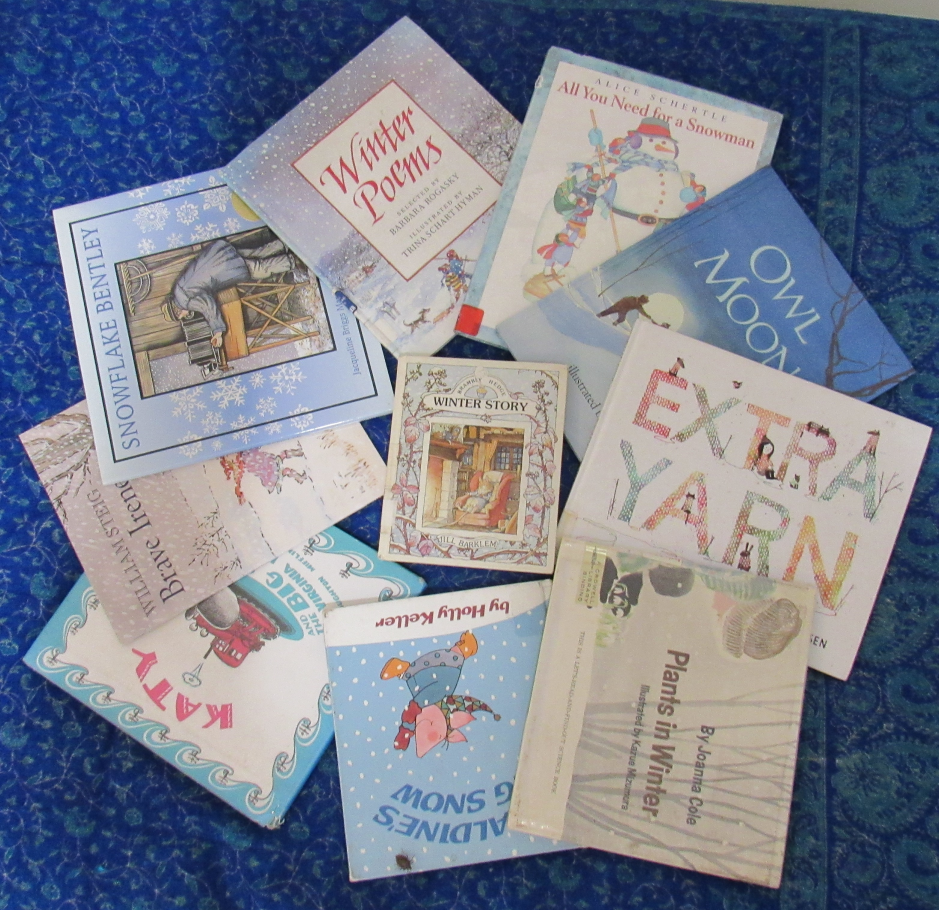
If I had children at home these days, I would officially declare a Winter Book Flood. What would I read aloud? Below are my favorites in order of difficulty.

The Snowy Day by Ezra Jack Keats, Katy and the Big Snow by Virginia Lee Burton, and Owl Moon by Jane Yolen.

Snowflake Bentley by Jacqueline Briggs Martin, Brave Irene by William Steig, Winter Story, and The Secret Staircase, both by Jill Barklem.

The Tough Winter by Robert Lawson, Trapped by the Winter Storm by Aileen Fisher, The Long Winter by Laura Ingalls Wilder, Prairie School by Lois Lenski, and Snow Treasure by Marie McSwigan. As a bonus, the first two teach about animals’ winter needs while the remainder teach history.

Giving myself “permission” to read the day away was a great winter gift.

Ready to declare a Winter Book Flood?

Book Recommendations, Homeschooling

One-Word Summaries

I wish I had read Summarization in Any Subject: 50 Techniques to Improve Student Learning by Rick Wormeli before I homeschooled. (See my favorite technique Here)

My second favorite technique is One-Word Summaries, which is not easy as many writers have noted.

I have made this (letter) longer because I have not had time to make it shorter.*

Pascal Translated from French

A One-Word Summary is simply choosing one word to summarize the lesson’s topic and explaining the choice. This method also works with favorite books, Scripture passages, best friends, trips.

Choosing requires processing an experience.  Eliminating excess words gets to the heart of a matter.

My husband chose “honor” to describe last year’s trip to Oklahoma.We traveled to honor an inheritance and the man who left it to me.

Explaining solidifies the understanding. We treated my uncle’s possessions and wishes with respect. We did our best to make sure his desires were satisfied.

Which one word summarizes your childhood? Your parenting? Your homeschooling experience?

*Benjamin Franklin and Mark Twain—among others—have used variations of Pascal’s statement.