
Homeschooling

February is Hard

I love winter—and not just the snow and glowing fireplaces and hibernating inside. The gift-giving holidays occur during winter, and I so love giving presents. I have more opportunities to drink hot chocolate. I can bake muffins and pies and not overheat the house. I can snuggle under blankets piled high and not overheat myself.

However, February was my hardest month to homeschool. When I told traditional teachers how I felt, they agreed. February was hard.

The excitement of new subjects has worn off like the edges of our new books. The end of the school year seems far away.

What did I do? Eventually, I learned to accept it. There was nothing wrong with me or my children or my school choices. It was a hard point in the journey that had to be traveled.

Second, I looked for a break in routine. Once, we spent the entire day reading about animals in winter after I kept yielding to “Another chapter, please.” We built models: castles, Viking towns, a Roman amphitheater and much more. We spent more time drawing. And no regrets.

How do you handle your hardest month?


Parenting

Changing Children

Sometimes, the consistency of our children’s behavior and interests is something to celebrate. (See Children Don’t Change Part 2 Here) What do we do when it isn’t?

Along the way, I learned how little control mothers have at times. The power to change our children, especially their hearts, has not been granted.

The only father who can “fix” his children is God, and one way He does it is through the prayers of parents.

For years, I envied Moms-in-Prayer.* I wanted my own prayer team, but the logistics did not work for homeschoolers.

In 2013, I began meeting with two friends to pray for our adult children. When one moved, it became a twosome.  I later gained a second prayer partner. When meeting was inconvenient, we prayed over the phone. 

Our rules: Confidentiality. Pray privately and do not share the requests of others. I have prayed in my minivan to achieve this. Respect boundaries. Some of your child’s situations are too private to share.

Consider telling your children that your friends are praying for them. One son texted a concern followed by “Alert the prayer team.”

Who will join you in praying for your children?

*https://momsinprayer.org

Parenting

Children Don’t Change Part 2

I previously shared how “dog” and “bird” were among the earliest words of my eldest son. (See Hang A Bird Feeder Here.) His interest in dogs and birds never wavered.

Our dog, Tramp, may have been a birthday present for my middle son and slept with my youngest son, but my oldest showed the most concern. He was the only family member who once noticed Tramp had not eaten for more than a day and cooked delicacies to tempt his appetite. He alone stayed with Tramp when he had to be put down. He was our dog’s best friend.

Tramp, our faithful dog 1998-2013

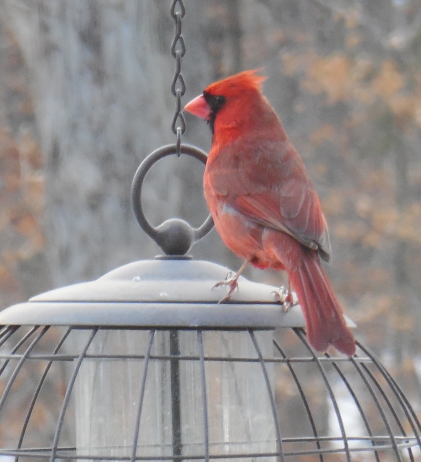
No one cares for the birds in our back yard and woods like my eldest. He notices their first reappearances. He cautions me not to scare them with my camera clicks. He reminds me to hang our bird feeders during snows and the extreme cold, and then, keeps watch to make sure the feeders stay filled. Birds are safer because of him. We enjoy birds more because of him.

Our deck February 2021

How little did we understand the significance of my son’s first words.

What unchangeableness can you praise?

Basics, Book Recommendations

Guitar Notes By Mary Amato

It is obvious that some kids are dying inside. Their anger, sour attitudes, and sloppy work are testimony.

What I learned along the way was that the child who is kind, complaint, and hardworking might be experiencing his or her own internal death.

Guitar Notes by Mary Amato beautifully portrays this dual reality. Tripp, a guitarist, and Lyla, a cellist, are dealing with very similar—yet, very different—painful circumstances. They are unable to communicate effectively with their caring parents.

One parent struggles to understand defiant behavior. The other has no clue that outward perfection hides intense pain.

If you have a tween or teen, I recommend you read Guitar Notes privately, and then, perhaps, with your child. It is a good conversation starter.

What methods do you have for discerning what is beneath the surface?

Homeschooling

Independent Learners

Multiple speakers and magazine articles had declared children were natural learners. (Natural Learners? Or Not? here.) Even better, teens were independent learners and required little parental input.

Early one morning, I sold a used geometry book online. The buyer asked if I had my lesson plans, and I offered my experience as well.

“My sons could not be given geometry and left alone to master it,” I typed. “They are not always independent learners.”

The admission was important to both me and my buyer. She confessed that her teens were not independent learners for most subjects.

Swapping stories felt like a conspiratorial moment against peers.

I added, “I would be upset if a traditional teacher handed my sons books to master and told them to return when ready to be tested. Why should we be expected to do that?”  

I am grateful to the home-educating pioneers for their courage, legacy, and advice. I am grateful they invested in my generation. However, those with both time and willingness to write articles and speak at conferences were the parents most likely to have strong independent learners. I wish I had realized this sooner.

Which declarations do not match your reality?