
Homeschooling

Planning For Sick Days

Even after I realized I should think like a professional—see here—I pushed forward and taught when I was sick. How could I stop homeschooling for a couple of days, let alone a week? I always felt behind, as most homeschoolers do.

Pushing on always delayed my recovery, which prolonged my misery and the number of unproductive school days. Each time I said it would be different next time. It wasn’t.

Paid teachers at traditional schools—notice I didn’t say real teachers—have substitutes and lesson plans for sick days. I might not have a paid substitute, but I should have had a plan that allowed rest and healing. Eventually, family circumstances required a plan.

My favorite was educational movies from the library and the How Great Thou Art art curriculum by Barry Stebbing. The easiest was a reading marathon. My boys could camp out in my bedroom and take turns reading aloud. Today, Kindle and streaming give last minute options.

A container of materials with a “Sick Days” label helps. It is also a constant reminder that sick days are a normal part of a parent/teacher’s life.

What is your favorite strategy for family illnesses?


Parenting

Feeling Loved

Along the way, I learned that my sons did not feel the love I thought I was showing.

When the children were young, I read The Five Love Languages of Children by Gary Chapman and Ross Campbell. One night at dinner, our family discussed the languages—gifts, physical touch, acts of service, words of affirmation, quality time. My sons identified their love languages, which were consistent with my observations.

Armed with new information and a desire to implement it, my sons still didn’t feel loved at times. Why?

The acts of service I performed were what I would have wanted as a child. I gave the words of affirmation I wanted to hear as a child. (See Their Longings, Not Yours here.)

More importantly, my desire for my children to know they were loved kept slipping down the list while my desire to train them for their future kept creeping back to the top. The necessities of daily living and culture wars re-enforced this tendency.

My peers and I feared our children being unprepared for their future adult challenges. We should have feared the consequences of them feeling unloved.

Is your love being felt?

Family, Friendship, Parenting

As Much As You Are Loved

“You are not behaving like someone who is loved as much as you are loved.”

After my boys were in college, I heard this response to a child’s behavior. I forgot the source, but not the sentence.

Along the way, I decided that while the sentence is a powerful response to behavior, it is not helpful for change, unless followed by a second question. “Why?”

Why do people, especially our children, not behave like someone who is loved as much as they are loved? I have pondered that even more as grown children express their frustrations. I have two answers

We are either not showing love or they are not feeling the love we are showing. I suspect the latter most often.

Are you feeling loved?

Decisions, Homeschooling, Parenting

Allowing Space to Grow

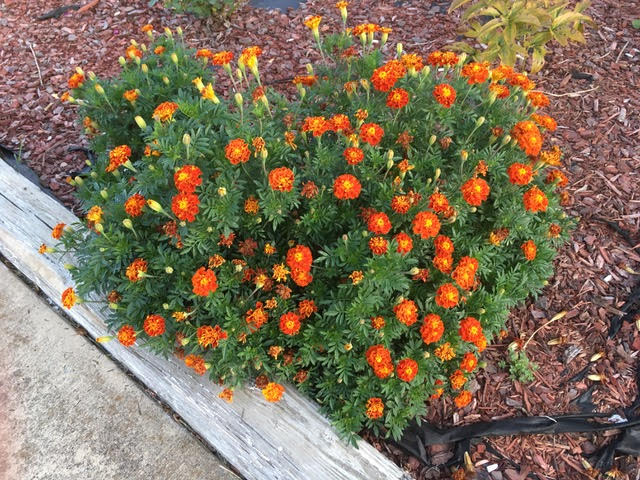
I dislike gaps in my flower beds. Therefore, I never planted my marigold seedlings the recommended distance apart—eight to ten inches for French marigolds and a full twelve inches for African marigolds.  I learned the error of my ways when I passed marigolds beside a city sidewalk. One seedling had grown into a small bush. I checked. One stalk.

Room to thrive. September 2019

Disliking gaps—especially while raising children—my husband and I crowded activities into our lives the same way I jammed marigolds into the small, soil patch at the top of our driveway.

Some academic years, I added too many subjects. I assured my husband I would find a way to make everything fit. I never did.

I wish I had known how much space was realistically needed for my flowers and my family and myself.

I enjoyed a variety of little blooms, but when I desired deep roots and tall flowers, I should have given more space—more than I imagined.

How many inches do you need this academic year?

Decisions, Homeschooling

Considering Quitting? Relationships Rule

Along the way, I learned that quitting homeschooling was one of the hardest and most emotional decisions families made. Leaving a loved, traditional school in order to homeschool was also hard.

My children’s relationships with God and our family were primary, not educational choices. Our family chose homeschooling because we believed it was our best fit. However, too many times, this choice hindered my husband and me from being the dad and mom our children needed. I watched other families experience the same.

What my sons were taught didn’t matter if they weren’t listening or were too were wounded to listen.

I witnessed marriages struggling because of educational choices. I watched families hesitate to leave extracurricular activities when they needed more space in their lives. And less structure. And more family time, which could never be regained once lost.

In making decisions to quit a course—and perhaps start a new one—I wish I had known how hard it is to repair broken relationships or crushed spirits that resulted from continuing activities beyond an optimal point.

What are your criteria for quitting activities?